Why Employee Generated Content Is the Next Best Tactic for Brands in 2026
Employee Generated Content is content created by employees that speaks to their authentic experience working at or alongside a brand.

Samuel Stapp
//
Digital Marketing Specialist

Why Employee Generated Content Is the Next Best Tactic for Brands in 2026

Not to be dramatic, but there's a quiet revolution happening inside brand marketing, and it's not coming from the creative department.
It's coming from the sales rep posting a LinkedIn selfie at a client offsite; the intern sharing a behind-the-scenes look at their first week in the office; the barista posting a day-in-the-life making coffee for customers. These aren't polished, campaign-approved pieces of content. They're real, unscripted, and exactly what audiences want to see in 2026.
Employee Generated Content (EGC) has moved from a fringe HR talking point to one of the most powerful tools in a brand marketer's arsenal. And yet most brands are still leaving it entirely on the table.
What EGC Actually Is (And What It Isn't)
Employee Generated Content is content created by employees that speaks to their authentic experience working at or alongside a brand. It can take many forms:
LinkedIn posts sharing professional wins, lessons, or commentary on industry trends
Short-form video (LinkedIn Videos, Reels, TikToks, YouTube Shorts) showing day-in-the-life moments or product insights
Long-form articles or newsletter contributions on topics employees know deeply
Social shares with personal captions added to company news or announcements
Unprompted, authentic content from your on-the-ground employees at store locations
Podcast appearances, panel discussions, or speaking slots at industry events
What EGC is not is a glorified content-distribution scheme in which employees are handed copy-paste posts and told to share them. That approach, sometimes called Employee Advocacy, has its place, but it misses the point entirely. True EGC gives employees room to speak in their own voice. The brand provides a framework; the employee provides the authenticity.
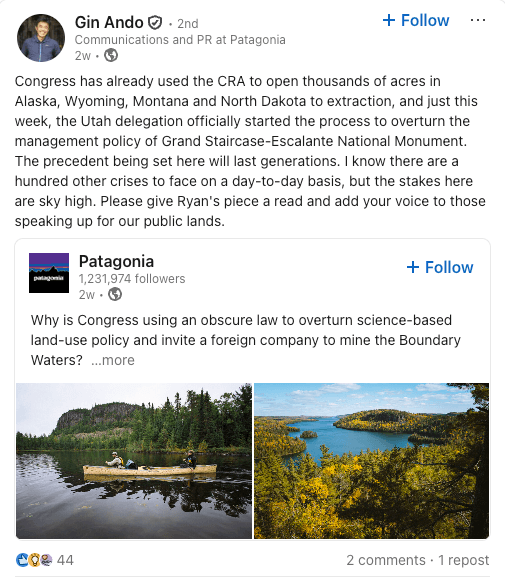
Take a look at these LinkedIn examples to see how simple, yet effective EGC can be for a brand:
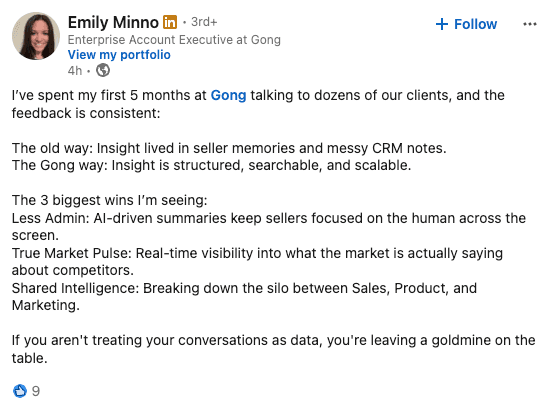
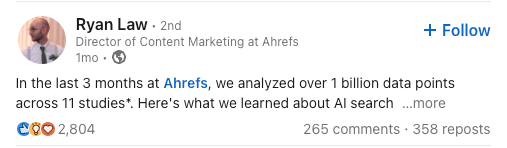
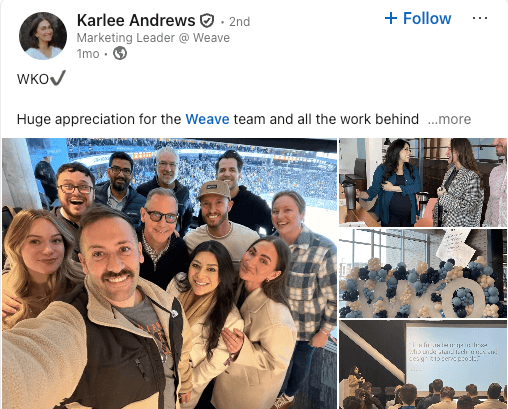
Why You Should Let Employees Generate Content on the Clock
Some of the most instructive EGC examples from the past year haven't come from polished B2B thought leaders on LinkedIn. They've come from retail floors and fast food restaurants, posted on a phone, mid-shift.
Staples Well-Received EGC
Earlier this year, a 22-year-old print specialist at Staples nicknamed “Staples Baddy” started posting TikToks about her job under the handle @blivxx, highlighting overlooked services like custom mugs, personalized stamps, and art prints -- and comments flooded in from people who had no idea those things existed. She filmed as if she were talking to a customer she'd known for years. She had no content strategy. It just worked.
What did Staples do? They got out of the way. The corporate account engaged in her comment section, PR reached out to her store, and the CMO put out a statement expressing pride and exploring ways to collaborate.
Whataburger’s EGC Flop
Compare that to Whataburger. A 17-year-old employee filmed a taste test of a new menu item on his break outside the restaurant, invited his audience to come visit his location, and was harassed by a coworker on camera mid-video. He was reportedly fired shortly after. The internet turned on the brand swiftly and publicly. (as it does)
Oftentimes, brands are so laser-focused on maintaining brand standards and rules that they miss out on free marketing. The employees who decide to post content about the brands they work for are tapping into audiences that already trust them and don’t see them as just another brand page. The choice isn't between EGC and maintaining brand standards. It's between your employees talking to those audiences, or nobody doing it at all.
The Algorithm Advantage Nobody Talks About Enough
Here's a business case that often gets overlooked: EGC performs better with algorithms, not just humans.
LinkedIn heavily prioritizes content from personal profiles over brand pages, especially in the early hours after posting. A single post from a well-connected employee can out-reach your company page, simply because the platform is built to surface person-to-person engagement.
The math is pretty straightforward. If you have 200 employees and each one reaches an average network of 500 connections, your potential organic reach is 100,000 people without spending a dollar. And because those connections are relevant to each employee's professional world, you're reaching qualified audiences, not just eyeballs.
Why 2026 Is the Tipping Point for EGC
The conditions in 2026 have never been better for EGC to scale:
The creator economy has normalized content creation. The psychological barrier to posting has dropped. A generation of professionals has grown up on social media and is comfortable building a personal brand alongside their career. That's an enormous untapped asset sitting inside most organizations right now.
AI-generated content is flooding the internet. As brands lean on AI to produce content at scale, the premium on authenticity has spiked. Audiences are developing a finely tuned radar for generic, templated content. A real person's real perspective is becoming the rarest commodity in a feed. When Rand Fishkin posts an unfiltered take on the state of SEO from his own experience building SparkToro, it cuts through in a way no polished brand white paper ever could.
B2B buyers are going to LinkedIn first. Long-form posts, newsletters, short videos, and collaborative articles have all taken off on the platform in the past 18 months. For B2B brands especially, this is where decision-makers are spending real time, and where an employee with genuine expertise can build brand equity that no ad budget can replicate.
Transparency has become a brand expectation. Audiences want to know who's behind the logo. Employer brand, culture content, and behind-the-scenes access have gone from nice-to-have to competitive differentiator, particularly in talent-constrained markets where top candidates research company culture before they ever apply.
Making It Work: A Framework for Brands
EGC doesn't happen by accident. It requires intention, infrastructure, and trust in both directions.
1. Build a culture before a content calendar. Employees won't create content if they're afraid of saying the wrong thing. The first job is to establish psychological safety: clear guidelines that empower rather than restrict, and visible leadership support. When the CMO or CEO is also posting authentically, it signals that this is valued, not surveilled.
2. Give people tools, not scripts. Offer content coaching, LinkedIn profile workshops, or short-form video training. Create a shared library of brand assets and messaging pillars employees can draw on. Then step back and let them do it their way.
3. Incentivise without mandating. Mandatory posting backfires. Instead, create organic incentives: feature exceptional employee content on brand channels, celebrate creators in internal communications, or tie content participation to professional development goals. Make it feel like an opportunity, not an obligation.
4. Start with willing advocates. Don't try to activate 500 people at once. Identify 10 to 20 employees who are already engaged on social, passionate about the brand, and comfortable with visibility. Build your EGC program around them first, document what works, and grow from there.
5. Measure what matters. Track reach, engagement, and referral traffic from employee content separately from brand page metrics. Over time, build a picture of which voices, topics, and formats generate the most impact and use that to coach others.
The Brands That Move First Will Win
The window won't stay open indefinitely. As EGC becomes more mainstream, the brands that have already built authentic employee voice programs will have a real head start in reach, in trust, and in the institutional knowledge of how to do it well.
Every employee who creates authentically is a content channel. In a media environment defined by noise, algorithm fatigue, and eroding trust, your employees are your most credible and most underutilized brand asset.Want help with an employee-generated content strategy that feels authentic and actionable? Reach out to RANDOM today.
More blogs.
Explore our collection of insights — from quick, actionable tips to in-depth explorations of design, development, and the evolving world of digital work.