Request A Proposal

Why Your Brand Isn't Showing Up in AI Search (And What To Do About It)

Categories: 
Author
Ryan Allen
Published
June 9, 2026

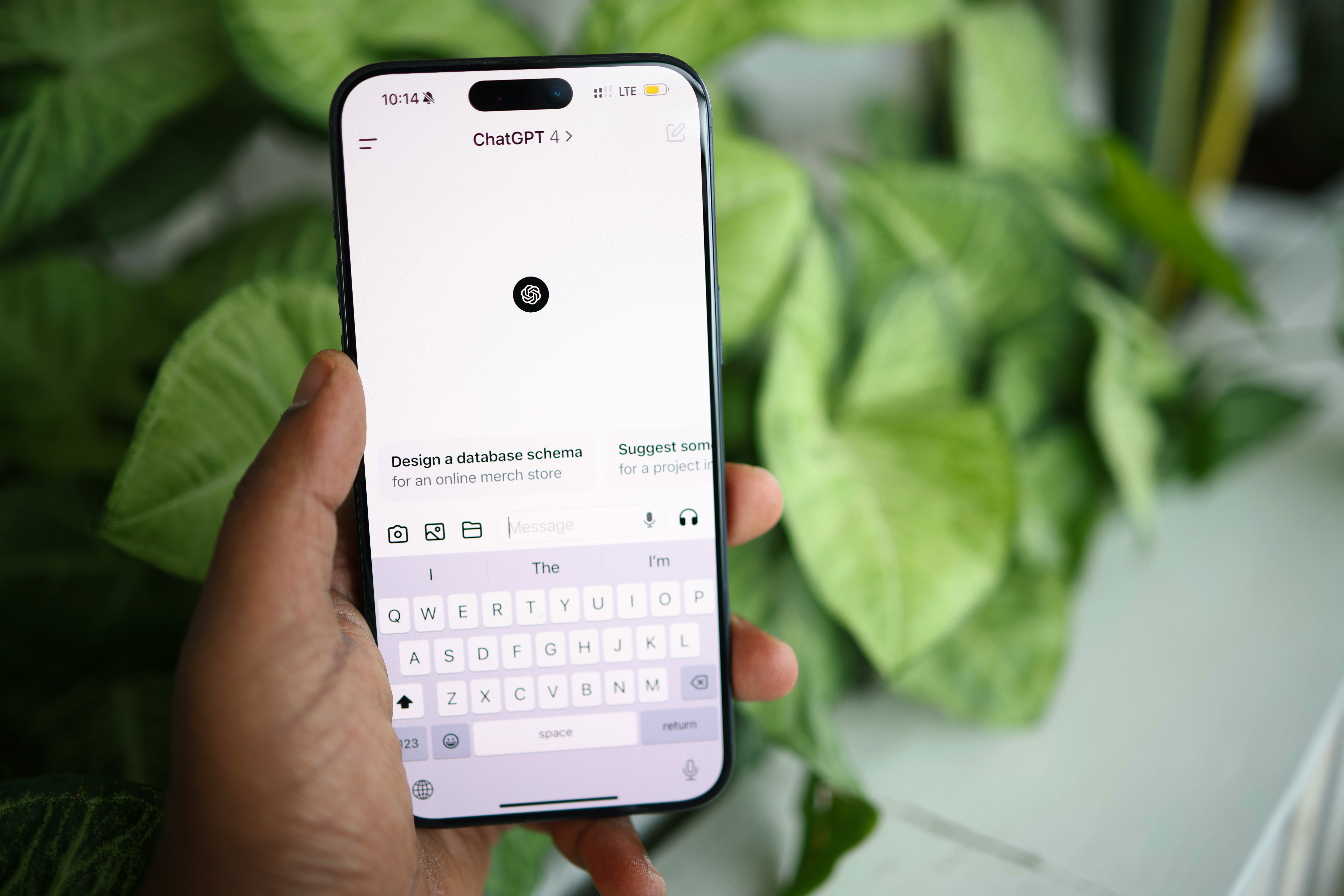
Ask ChatGPT to recommend a B2B email service provider. You'll get Mailchimp, Klaviyo, Customer.io. Ask Perplexity for the best mid-market workforce management platform and you'll get four or five names, every time, the same handful. Now type your own company's category into any AI assistant. Does your brand show up? Does anything close to it?

If you don't know, you're in good company. Most CMOs at mid-market B2B and CPG brands haven't checked. Some don't know they can. That's the part that should keep you up at night, because the buyers who used to start their journey on Google are starting it inside ChatGPT, Perplexity, Claude, and Google's AI Overviews. If you're not in the answer, you're not in the consideration set.

This is the new shape of organic discovery. Here's what it looks like, and what to do.

SEO vs GEO: What's the difference?

SEO got you on the page. GEO, or Generative Engine Optimization, gets you in the answer.

That's the whole shift. Search engines used to hand you a list of blue links and let buyers do the sorting. AI assistants synthesize. They read across hundreds of sources, decide who counts, and produce a short list with reasoning attached. The buyer reads three sentences, picks two brands to investigate, and moves on. Your existing SEO playbook (keywords, backlinks, page speed) still matters for traditional search, but it doesn't get you cited in an AI answer. Different game, overlapping rules.

GEO is about being the brand the model considers credible enough to name.

How to audit your AI search visibility in twenty minutes

You don't need a tool. You need a list and a free afternoon.

Open a doc. Write down ten to fifteen queries your buyers actually type. Not your branded terms (your brand will obviously show up for those). Use the unbranded language prospects use when they don't know you exist:

  • best [category] for [customer type]
  • alternatives to [your biggest competitor]
  • top-rated [category] in [region or industry]
  • [problem] solutions for [company size]

Now run those queries through ChatGPT, Perplexity, Claude, Gemini, and Google's AI Overview. Note which brands get named, the sources the AI cites, and whether your brand appears anywhere in the answer or the citations.

You'll learn three things fast: who the AI thinks the major players are, what sources it trusts in your category, and where your absence is loudest. Most mid-market brands score zero out of fifteen on their first audit. If that's you, good. You've found the gap.

What signals drive AI recommendations?

AI assistants don't pull from one place. They blend pretrained knowledge with live retrieval, and the signals they weigh aren't the ones your SEO team has been optimizing for.

What seems to matter, based on what we've seen across client audits:

Sustained mentions in trusted third-party sources. Industry publications, analyst reports, podcasts with editorial credibility, niche newsletters. The model wants to know that other people, with reputations, treat your brand as a real answer.

Specific, structured content on your own site. Comparison pages, glossary entries, methodology explanations, original data. Not blog posts that summarize what's already out there. The model can already do that.

Mentions in context, not just mentions. Being named alongside the words and competitors your category gets discussed with. If you sell a workflow automation tool, you want to be cited in the same sentences as the other workflow automation tools, by people who use those words on purpose.

Community presence with depth. Reddit threads, Slack communities, niche forums, LinkedIn discussions. AI models pull heavily from places where real practitioners talk shop. If your brand never comes up in those rooms, you're invisible to the retrieval layer.

Consistency. The same factual story about your company, told the same way, across enough independent sources that the model can triangulate.

Notice what's not on this list: paid ads, keyword stuffing, AI-generated blog content. The model is, ironically, the best AI-slop detector ever built. It will deprioritize content that pattern-matches to its own output.

Where mid-market B2B and CPG brands keep coming up short

Three patterns we see, over and over.

The brand has a clean website, good SEO, decent organic traffic, and zero presence anywhere else. No earned media engine, analyst relationships, or community work. The AI has no third-party signals to triangulate on, so it doesn't surface them.

The brand publishes content, but the content sounds like everyone else's. Same listicle structures, same generic advice, no original data, no point of view a real human would remember. AI models reward distinctiveness, because they're trying to give a useful answer, not a Wikipedia summary.

The brand has a category that's well-defined in the market, and the founders are visible inside it, but nobody outside the company is talking about them in writing. Earned mentions are the connective tissue AI models actually trust. Without them, you can have the best product in the category and remain unknown to the answer layer.

The three levers worth pulling

If you're starting from zero on AI search visibility for brands, focus on three things. They compound.

Community management

Show up where your category actually gets discussed. Reddit subs, Slack and Discord communities, LinkedIn comment sections, industry forums, niche newsletters with engaged audiences. Not to spam. To contribute. Answer questions. Share data. Engage when your brand comes up, and politely insert yourself when it should have. AI retrieval layers pull from these places because they're where the unfiltered language of buyers lives. A handful of high-quality, in-context mentions in the right communities will move the needle more than a year of generic blog posts.

Earned media

Build relationships with the journalists, analysts, podcasters, and newsletter operators who cover your category. Not a press-release machine. A real, ongoing effort to give them something worth covering: data they don't have, executives with a point of view, customer stories with specifics. Earned media is the most credible signal an AI model can find about your brand, because it's the hardest to fake. One feature in a publication the model considers authoritative will outweigh fifty self-published thought leadership pieces.

Content quality

Write things only you can write. Original research, customer outcomes with real numbers, methodology explanations, contrarian takes that hold up. Stop publishing the obligatory "What is [category]?" post; the model has that covered. Publish what the model can't get anywhere else, structured for citation: clear questions, direct answers, sourced claims, named experts. Quality here means usefulness, not word count.

These three levers pull on each other. Great content earns coverage. Earned coverage drives community interest. Community discussion creates the mentions that train future model retrieval. You don't have to be perfect at all three. You have to start.

Frequently asked questions about AI search visibility

How long does it take to show up in AI search results?

Anywhere from a few weeks to several months, depending on the category and how aggressively you're building third-party signals. Real-time retrieval (Perplexity, ChatGPT with browsing, Google AI Overviews) can pick up new mentions quickly. Pretrained knowledge in the underlying models updates on a longer cycle. Plan for a six-month horizon to see compounding results.

Do I still need to do traditional SEO?

Yes. Traditional search isn't going away, and AI assistants often pull from the same sources that rank well in Google. The work overlaps, but the optimization priorities shift. Strong organic SEO without an earned media and community layer will still leave you out of AI answers.

Can I buy my way in with paid ads?

No. AI answer layers don't surface paid content the way search engine results pages do. Some platforms are testing sponsored placements, but the recommendation logic in the answer itself is driven by what the model treats as credible, and paid placement isn't credibility.

What if my category is too niche for AI assistants to know?

That's an opportunity, not a problem. Niche categories with thin coverage are easier to influence, because there's less competing signal. A focused effort on earned mentions and community presence can move your brand into the default answer faster in a small category than in a saturated one.

How do I know if it's working?

Re-run your audit every quarter with the same query list. Track which brands get named, how often yours appears, and which sources the AI cites when it does. Watch your branded search volume, your referral traffic from AI tools (some shows up as direct, which is its own problem), and the conversations you're being included in.

This is the trap. AI-generated content that reads like AI-generated content gets deprioritized. You can use AI to draft, research, and edit. If the final product has no point of view, no original data, and no human voice, the model recognizes the pattern and treats the content accordingly.

Want to know where your brand stands?

The first audit costs nothing but a couple of hours of your time. Do it. You'll learn more about your current AI search visibility for brands in your space in one afternoon than you will from any vendor pitch.

If you'd rather have someone else run the audit, identify the gaps, and build the plan, that's exactly the conversation we're set up for. We've been doing this work for B2B and CPG brands long enough to know what moves the needle in which categories, and we're happy to walk you through what we're seeing.Start the conversation.

Newsletter Signup
Join our exclusive community and receive cutting-edge tips, inspiring stories, and the latest trends right in your inbox.

* indicates required
Copyright © 2020 – 2026 That Random Agency | All Rights Reserved | Privacy Policy
magnifiercrossplus-circletext-align-justify
linkedin facebook pinterest youtube rss twitter instagram facebook-blank rss-blank linkedin-blank pinterest youtube twitter instagram