Celebrating National Small Business Week: 8 Social Media Post Ideas
National Small Business Week (April 28 - May 4) is a time to celebrate the heart and soul of the American economy - the small businesses. It's a week dedicated to highlighting the impact of outstanding entrepreneurs and small business owners across the nation. As social media enthusiasts, we understand the importance of leveraging this week not just to celebrate, but also to engage and grow your audience. So here are some innovative and engaging social media post ideas to inspire you and help your small business stand out during this special week.
1. Share Your Story
People love stories, especially those that inspire, motivate, or resonate with them on a personal level. Kick off National Small Business Week by sharing your journey. How did your business start? What drives you to succeed? This not only humanizes your brand but also builds a deeper connection with your audience.
Your customers are the backbone of your business -- So let it be known! Create posts that show your appreciation for their support; feature customer stories, testimonials, or even a photo collage of customers with your products. You could even consider offering a special discount or a giveaway as a token of your gratitude.
3. Behind-the-Scenes Glimpses
Give your followers a peek behind-the-scenes. Share photos or videos of your team in action, your workspace, or the making of a product. This type of transparency on social media builds trust and displays your team's hard work and dedication that goes into running your business.
Your employees play a crucial role in your business's success. Help celebrate them and create a series of posts dedicated to introducing your team members! You could share fun facts about them, their roles, or highlight their achievements. This not only boosts morale within your team but also shows your followers the faces behind the brand.
5. Collaborate with Other Small Businesses
National Small Business Week is the perfect time to support fellow small businesses. Collaborate on a social media campaign, host a joint giveaway, promote each other's businesses, or simply promote small businesses in general! This fosters a sense of community and exposes your business to a wider audience.
6. Educational Content
Share your expertise with your followers. Create posts that educate your audience about your industry, products, or services. This could be in the form of tips, how-to guides, or interesting facts. Educational content not only adds value but also positions your brand as an authority in your field.
Engage your audience with interactive content. Host a Q&A session, conduct polls, or create a quiz related to your business or industry. Interactive posts are not only fun but also increase engagement and give you insights into your audience's preferences.
8. Reflect on Your Impact
Lastly, reflect on the impact your business has had on your community or industry. Share any milestones, achievements, or contributions to local causes. This not only showcases your business's values but also reinforces your commitment to making a difference.
National Small Business Week is an excellent opportunity to showcase your business, engage with your audience, and celebrate the entrepreneurial spirit. By implementing one (or all) of these social media post ideas, you can create a meaningful and memorable National Small Business Week for your followers. Remember, the goal is to connect, inspire, and grow your community. Have a happy National Small Business Week!
Looking for social media specialists? Work with a small business who understands small businesses. Let’s get in touch!
Why Building Photos Go Viral: A Random Social Media Study
As social media data junkies, our team at Random loves to explore the reasons why some of our social media posts perform better than others. The topic at hand? Why photos of buildings (that's right, buildings) tend to perform higher than other photos on social media.
The Building Blocks
In the ever-evolving landscape of content marketing, it's crucial to understand what resonates with your audience. Recent research and analysis of client data have revealed an intriguing trend: content featuring images of buildings significantly outperforms other types of content in both engagement and impressions. Let's delve into the numbers and the potential reasons behind this phenomenon.
For the purpose of this study, we stuck to one social media platform: Instagram. Our Social Media Analyst did some deep diving into our clients' social media profiles and collected any photos that displayed the exterior of their buildings. Once the sample of posts was collected, he proceeded to examine the posts based on various KPIs, keeping a focus on engagement and impressions.
What Stands Out
Engagement: Content with images of buildings averaged an impressive 89.5% better in engagement compared to the monthly content averages.
Impressions: Such content also saw a 44% increase in impressions over their monthly content averages.
These statistics are compelling, suggesting that there's more to building imagery than meets the eye.
Breaking it Down
Hypothesis #1: Breaking the Monotony with Visual Appeal
Most content calendars feature a myriad of images, from people and products to landscapes and abstract graphics. However, our data indicates that there are usually no more than 1 or 2 photos of buildings per month in the case of our clients, Comerica Bank. As you can see, in Comerica Bank's Instagram feed, the scarcity could be a reason that these images stand out, breaking the content monotony. Their unique visual appeal might be the breath of fresh air that users need, prompting them to engage more with the content.
Hypothesis #2: Landmarks for Branding
Buildings, especially iconic ones, can serve as recognizable landmarks. When consistently featured in content, they can become synonymous with a brand's identity. Think of how the Eiffel Tower is instantly associated with Paris or how the Golden Gate Bridge is emblematic of San Francisco. By leveraging such powerful symbols, brands can create a strong visual identity that resonates with their audience.
Here are two examples of buildings that Comerica Bank holds near and dear to their heart. Their newest construction, known as Business HQ, and the Comerica Tower, both located in Dallas, TX, are pinnacle examples of how companies can use buildings as part of their brand image.
Hypothesis #3: A Sense of Geography and Relatability
Buildings inherently convey a sense of place. Whether it's a skyscraper in New York or a historic building in Texas, they ground content in a specific geography. This can foster a sense of relatability, especially among local audiences. For instance, this photo of the Comerica Tower amongst the Dallas, TX, skyline, may have resonated with our local audience and given them a sense of pride, ultimately making them more likely to engage with it.
While the exact reasons behind the success of building imagery in content marketing might remain a subject of debate, the numbers are clear: they work. Whether it's their rarity, their branding potential, or their geographical significance, buildings have carved a niche for themselves in the content landscape.
Brands looking to boost their engagement and impressions might consider incorporating more architectural imagery into their content strategy. After all, in the world of content marketing, it's all about building connections “ and what better way to do that than with buildings?
Break the monotony; let Random get your audience engaged! Contact us to learn more about how we can transform your social media.
Say "hi" to Shelby, That Random Agency's newest Social Media Specialist! We can't wait to get to know her and what better way to do that than a Q&A?
First, the obvious question: Why did you choose Random Agency?
Their vibrant and energetic culture caught my eye! I loved the personality that they brought to their own brand & the emphasis they put on making an effort to always be growing, learning, and sharing!
Tell us three Random Facts about yourself.
This question might be one of my Top 5 Worst Fears
Not to brag but I am a four time elementary spelling bee champ. 😤💪ðŸ»
When I'm not doing social media for work, I do it as a hobby! You could say I'm becoming an influencer of sorts
Favorite TV show?
Depends on the day Psych will always be my #1 comfort show, but I could talk to you forever about Barry or Ted Lasso.
If money was no object, where would you go and what would you do?
My husband, my pup & I would definitely move to New York and buy a beautiful, old brownstone in Brooklyn.
What's in your refrigerator right now?
Literally what isn't in there? A case of Diet Dr. Pepper An old bottle of wine or two Some Frank's Red Hot Buffalo sauce Oh, and way too many leftovers to count. It's fine.
If you could have a superpower, what would it be?
Super speed. I am admittedly the reason my chronically early partner is never on time to functions anymore
What's your favorite childhood memory?
I used to do summer camps at the local theater in middle school and I look back pretty fondly on that.
Name one thing you wish you could do better.
I used to work at a third-wave coffee shop so I wish I could make decent latte art with my at-home espresso machine. A frothy blob is really exciting when you don't have a $30,000 machine to steam your milk just right.
Which three things would you take to a desert island?
I'm boring The dog, the man, the phone. 5G is like everywhere, right?
What is the last book you read?
Strangers by Nature by Madison Heberlie
What is your favorite account to follow on TikTok?
Leveraging LinkedIn: A Guide for Executive Leaders
Professional networking and personal branding have become essential in today's digital age. LinkedIn has emerged as a powerful platform for executive leaders, offering a unique opportunity for professionals to connect, share insights, and build meaningful relationships within their industries. In this blog post, we will explore how executive leaders can leverage the power of LinkedIn to enhance their personal brand, expand their network, and drive professional success.
Crafting an Engaging Profile
The first step to harnessing LinkedIn's potential as an executive leader is to create a compelling and professional profile. Pay special attention to your headline, summary, and experience sections to ensure they're up-to-date and accurate. Use concise yet descriptive language to highlight your expertise, achievements, and leadership skills that you've developed in your roles. Pro Tip: Including a professional headshot further enhances your credibility and helps make a strong first impression.
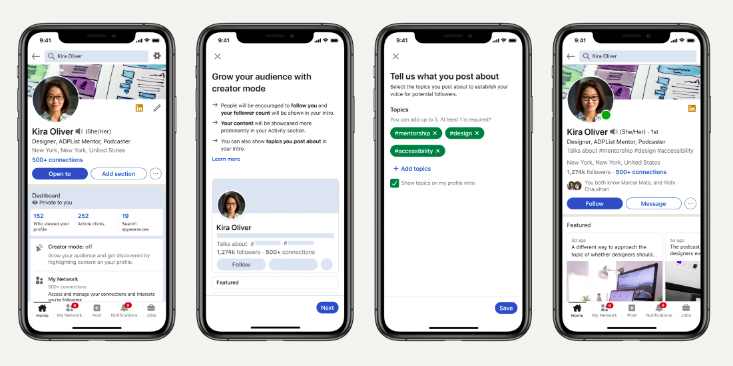
If you're a consistent poster on the platform and want to take your profile a step further, turn on ˜Creator Mode' to turn your connections into followers. By turning this feature on, you can grow your reach while gaining access to additional features such as:
Displaying topics you often talk about in your content
Ability to add a link to your profile
Become eligible to be featured as a suggested creator
Gain access to LinkedIn Live and Newsletters
Access creator analytics such as post and audience data
Establishing Thought Leadership
LinkedIn is an excellent platform for executive leaders to establish themselves as thought leaders in their respective industries. Individuals can share valuable content such as articles, videos, or thought-provoking insights on trending topics to engage industry-specific users. Ignite and participate in discussion to showcase your expertise and provide value to others while gaining new perspectives. Depending on your wheelhouse, you can publish original articles that allow you to showcase your thought leadership to a broader audience and attract new followers.
Building a Relative Network
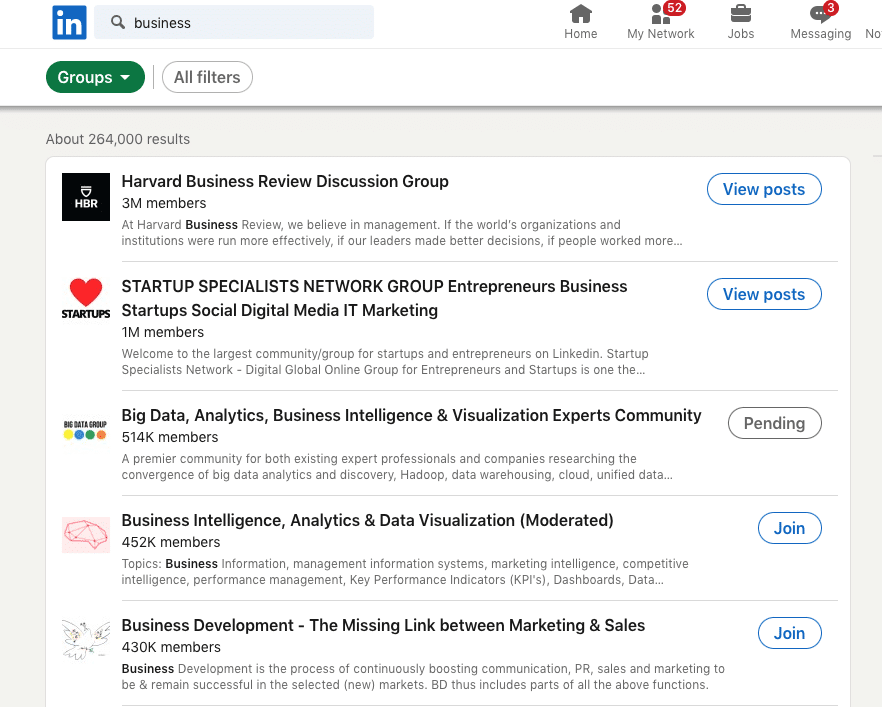
LinkedIn is a powerful tool for expanding your professional network. We recommend connecting with industry peers, colleagues, clients, and other professionals who share similar interests. Actively seek out and join relevant groups and communities to engage with like-minded individuals and foster meaningful connections. Networking on LinkedIn opens doors to new opportunities, collaboration, and knowledge sharing.
Engaging in Relationship Building
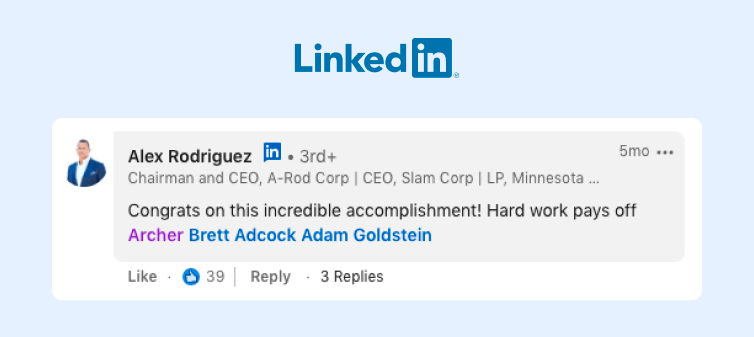
Building relationships is vital for executive leaders, and LinkedIn facilitates this process. Engage with your connections by liking, commenting on, and sharing their content. Show genuine interest in their professional journeys, congratulate them on achievements, and offer support when appropriate. When applicable, share posts that give you the opportunity to tag fellow colleagues to further build your relationships and expand your reach. Building a strong network is about fostering mutually beneficial relationships that can lead to partnerships, referrals, and career growth.
Staying Active and Consistent
Consistency is key when it comes to LinkedIn. Regularly engage with your network by sharing valuable content, commenting on relevant posts, and responding to messages. By maintaining an active presence, you increase your visibility and build credibility within your industry. Allocate dedicated time each week to nurture your LinkedIn presence and make it a part of your professional routine. Pro Tip: Turn your busy schedule into opportunities. Share your experiences such as recent events you attended, client meetings, career wins, and other company-wide news as posts on your LinkedIn page.
LinkedIn has evolved beyond a mere job search platform and transformed into a valuable resource for executive leaders. By leveraging the power of LinkedIn, you can enhance your personal brand, establish thought leadership, expand your network, and drive professional success. Embrace this digital networking tool, and unlock its potential to connect, inspire, and collaborate with professionals around the globe.
Remember, your LinkedIn presence is not just a profile; it's an opportunity to showcase your leadership and make a lasting impact in your industry.
Talk to us about our wide-ranging experience in creating thought leadership content for executive clients on LinkedIn! We'd love to work together.
Balancing Personal Social Media as a Social Media Manager
If you've grown up with social media, you may be unfazed by the countless notifications that you receive throughout the day. Seamlessly moving from platform to platform and learning the latest features is something that comes naturally to you, and you enjoy connecting with your friends, family, or whoever you may meet. But the social media space has become flooded with brands, creators, and celebrities, all the while creating more career opportunities to work within the industry at your 9 to 5. If you're one of those people (a.k.a. us), you may love your career in social media but find it overwhelming to scroll after hours. We're here to help you understand what you can do to save your relationship with social media and how to balance the personal and professional sides of it.
Set Time Limits
One feature available to smartphone users is the ability to set time limits on individual apps and your phone altogether. Whether you need to limit certain apps such as TikTok (we're all guilty of the doom scroll, it's okay), or you need a scheduled break, your smartphone's got your back. If you have an iPhone, visit your settings and find the Screen Time feature; Android users can discover the Digital Wellbeing feature. When you set a time limit, you'll receive notifications letting you know when you've reached your max. Take this as you need it! Setting boundaries is great; knowing your limits can benefit your mental health.
Reduce Notifications
Reevaluate the notifications that you feel are worth popping up on your lock screen. With so many apps on our phones, the amount of notifications we receive each day can quickly become overwhelming. The good news is you have a few options when it comes to which notifications are worth your attention. There are plenty of options when it comes to limiting your notifications, including how they are displayed on your lockscreen, to how you receive them for individual apps. Take a minute to go through your settings and decide which display is right for you.
Focus Mode
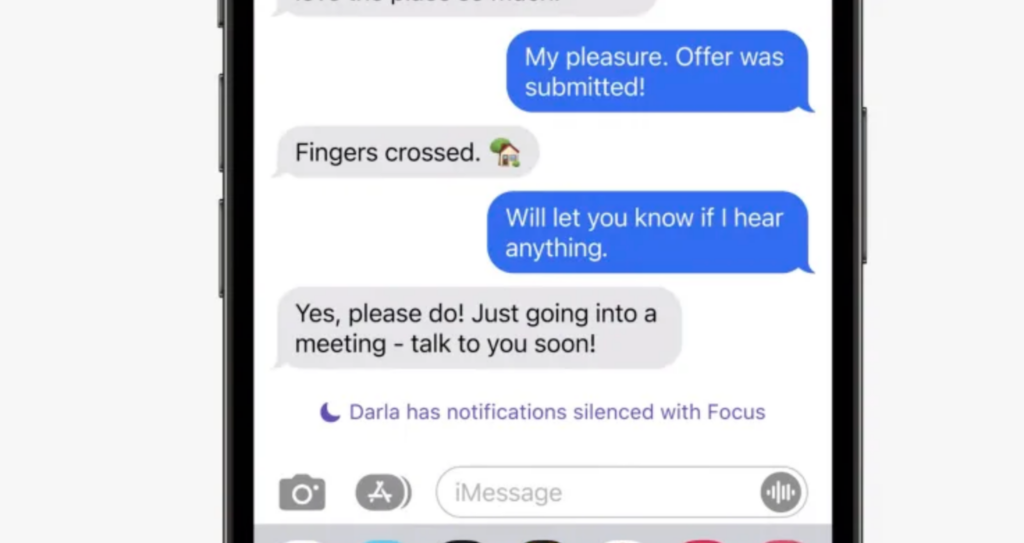
This is a great feature for a variety of circumstances. To silence your phone in a meeting, throughout the workday, putting your phone down for some R&R, or for whichever reason you need, the Focus or Do Not Disturb feature is a viable option. Most smartphones have a Do Not Disturb feature available to you that temporarily shuts off any and all notifications, texts, calls, etc. Don't want to turn everything off? No worries! You can make exceptions if you need to, but this is a great feature to utilize when you don't want to be bothered by a buzz or a ding. You can even let your contacts see when your phone is on Do Not Disturb (transparency at its finest!). We're huge advocates for this feature; just ask our Social Media Specialists.
Make Your Personal Feed Personal
Want your personal feed to be something you value? Reevaluate the accounts follow. If your professional feed is something you can continue to gain inspiration from, keep up with the latest news, discover other brands, and then keep it to your workself. Think about making your personal feed, well, personal. Consider designating your following to friends, family, and other accounts that bring positivity into your life. This technique can help you better your relationship with social media outside of your career and contribute to the work-life balance we all strive for.
Pro tip: Create an account just for the 9 to 5 you!
We hope these tips will help all our social media professionals improve their relationships with social media after hours.
Boost Your Brand with Employee Advocacy
In today's digital age, social media has become an integral part of our daily lives. From Facebook to Instagram, and Twitter to LinkedIn, social media platforms have evolved into powerful tools for businesses to connect with their customers and promote their brands. However, a recent strategy that is gaining popularity among companies is employee advocacy through social media.
Employee advocacy is the promotion of a company's brand, products, or services by its employees on social media platforms. It is a powerful tool for companies to increase their brand awareness and credibility among their target audience. In this blog post, we will explore why employee advocacy on social media is important to companies.
1. Increases brand reach
Employee advocacy on social media helps companies increase their overall brand reach. When employees share company content via their social media profiles, it has the potential to reach a wider audience beyond the company's existing followers. This increases the reach of the company's message, helping attract a new audience including potential customers.
Just starting employee advocacy in your company? Consider starting with LinkedIn! With more and more features being added to the platform, it's easier than ever for users to interact and share posts with their connections. For example, the ˜Repost with Thoughts' feature makes it easy for users to share an original post from a user or company and add additional context. Using this feature, both the original post and comment from the said user will be shared with their followers and/or connections. A Double-Whammy!
2. Builds trust and credibility
People are more likely to trust other people. Corporate content can only go so far, and people love to see authentic content from their friends and peers. That's why employee advocacy on social media helps build trust and credibility for a company's brand. When employees share company content on their social media profiles, it can help humanize the brand and make it more relatable to potential customers. This, in turn, can help build trust and credibility for the brand. Think ˜modern-age word-of-mouth.'
3. Attracts talent
This concept can also help attract talent to a company. According to GlassDoor, 79% of job applicants use social media in their job search. It's important to meet your potential employees where they're already at. And when employees share their positive experiences working for a company on social media, it can help showcase the company's culture and values. This can be attractive to potential job candidates who are looking for a company that aligns with their values and beliefs.
4. Boosts employee morale
Employee advocacy on social media can also boost employee morale. When employees are encouraged to share their positive experiences working for a company on social media, it can make them feel valued and appreciated. This can lead to higher job satisfaction and employee retention.
5. Cost-effective marketing
Employee advocacy on social media is a cost-effective marketing strategy. It is a way for companies to leverage their existing resources “ their employees “ to promote their brand. This can save companies money on marketing and advertising costs, while still reaching a wide audience. In fact, according to everyonesocial.com, an employee advocacy program costs, on average, 1/10 of paid advertising. So, what are you waiting for?!
In conclusion, employee advocacy on social media is an important tool for companies to increase their brand awareness, credibility, and reach. It can also help attract top talent, boost employee morale, and minimize marketing costs. Companies that encourage employee advocacy on social media can reap the benefits of this powerful marketing strategy.
Need to consult on an Employee Advocacy Strategy? Send us a message to get started!
Whether you're a new user of Facebook Ads Manager or have extensive experience with the program, we're here to lay the groundwork for what you need to know to create a successful campaign. Welcome to the first part of our series on Mastering Facebook Ads Manager. In this introduction, we're discussing arguably one of those most essential parts, the campaign objective.
The Basics
If you're new to Facebook Ads Manager, there are some basics you'll need to know before moving forward. And if you're not new to Ads Manager, use this as a refresher course because we all need a refresher sometimes.
To make this even easier on you, we'll remind you to solidify your business goals (or your client's goals) before you start creating your campaign. By having your goals in mind, you can directly translate them into your campaign objective for a more effective campaign.
With that, let's jump in. The three components that make up an ad campaign within Ads Manager are the campaign, the ad set, and the ad(s). When you begin creating your campaign, you'll have to choose an objective, which you'll see in a window like this:
As you can see, Ads Manager classifies these objectives into three categories: awareness, consideration, and conversion. We're here to help you understand these categories and the objectives which fall under each so you can make an informed decision.
Here's a brief breakdown of the campaign objective categories:
Awareness: Brand Awareness, Reach
Consideration: Traffic, Engagement, App Install, Video Views, Lead Generation, Messages
Conversion: Conversions, Catalog Sales, Store Traffic
Now let's take a deeper look into each objective, so you know how to translate your business goals into your next campaign with Facebook Ads Manager.
Awareness
The first objective category we'll be breaking down is awareness. If you're looking to spread the word about your brand, product, or service to a broader audience within your target market, awareness might be for you. Two objectives fall under awareness in ads manager: brand awareness and reach.
Brand awareness is for just that, increasing awareness about your brand, product, or service to an audience within your target market. This is the only objective on Facebook that gives you access to a unique metric called ad recall lift. Ad recall lift is the estimated number of people that will remember seeing your ad if asked about it within two days. Use this objective if you want to increase brand awareness or change brand perception, show your ad to as many people in your audience as possible, or share videos of your business with people who are likely to watch.
E.g., Your business is brand new, you recently rebranded, or you're opening a new location, etc.
Reach is an objective that also falls under this category. Choosing reach as your objective will allow Ads Manager to show your ad to as many people as possible within your target audience. To get the most out of this objective and minimize ad fatigue, we recommend you use reach when targeting smaller audiences.
E.g., A small business is offering a specific service.
Consideration
The second category is consideration. Consideration will reach people interested in your brand or similar brands and encourage your audience to think about your business and seek more information.
In Ads Manager, this category has several objectives: traffic, engagement, app installs, video views, lead generation, and messages. Let's get to know each objective.
Want to direct your audience to a specific place? Traffic is an excellent choice for an objective. You can choose where to direct customers with each ad set, such as a landing page. To take it a step further, you can even add an offer, such as a discount code, that users can utilize when visiting said page. This is a great objective if you wish to optimize your ad sets for click impressions, landing page views, or unique daily reach.
E.g., A gym is promoting an offer on their classes.
Engagement is the objective to choose if you wish to reach people more likely to engage with your post. When selecting this objective, you can choose from three types of engagement you'd like your campaign to achieve: post engagement, page likes, or event responses. If you wish to optimize your ad sets for post engagement, impressions, or unique daily reach, consider engagement for your objective.
E.g., A local bar is promoting their trivia night.
Have an app and want to encourage your audience to download it? The app install objective allows you to select a call-to-action that optimizes your campaign for app installs, app events, a combination of both, or even for revenue per install.
E.g., You're releasing a new app that shows local hiking trails and want avid hikers and active people to check it out.
Are you promoting a product or service via video? The video views objective helps you share your video with those who are most likely to watch them. This objective optimizes your ad set for short, continuous views or complete plays, depending on how you desire your audience to interact.
E.g., You're capturing your audience's attention with a short video showing your business, product, or service.
Want to collect more information from the people you're reaching? Lead generation allows you to do so through an instant form option that has people sign up right within the page of your ad. You can even choose from a list of call-to-actions that will help increase prospective customer inquiries.
E.g., You want to increase sign-up for your newsletter.
The last objective within the consideration category is messages. This allows your brand to connect with potential or existing customers to generate interest in your business. You can choose where your audience can message you for information (such as Facebook Messenger, email, etc.) and optimize your ad sets for conversations or lead generation.
E.g., Your ad requires your audience to know more than the initial interaction.
Conversion
The third campaign objective category in Ads Manager is conversion. Through conversion, you're reaching people who have already intended to purchase your product (or similar products) and encouraging them to take action. Under the conversion category lies the objectives of conversions, catalog sales, and store traffic.
The conversions objective encourages people to take a specific action on your website, such as account creation or purchase of a product. You can choose where you direct traffic from each ad set and optimize your ads for conversions, conversations, clicks, impressions, or unique daily reach.
Note: To utilize this objective, you'll need to take it a step further and install either Meta Pixel on your website or the Facebook SDK on your app.
Meta Pixel: A piece of code that helps businesses understand how people interact with their website.
Facebook SDK: An analytics tool that enables businesses to measure actions people take on their apps.
E.g., A clothing company is promoting a product that was just launched.
If you want to display your products and generate sales, catalog sales is your objective. With this objective, you'll need to upload your product catalog and create product sets to display the range of products in each ad set. Additionally, you can add an offer, such as a discount code, or use the dynamic ad creative option to show different versions of your products. This objective allows you to optimize your ads for conversion events, clicks, and impressions.
E.g., A shoe company is offering various colorways of their new shoe.
Want to encourage people to visit your brick-and-mortar location? Store traffic may be your objective of choice. You can promote your location to people nearby, even selecting a radius around your store that you'd specifically like to reach. Do you offer collection or delivery services? There's a call to action for that too!
E.g., A new restaurant wants to encourage local customers to visit their location.
You've Mastered Objectives!
Congrats, you've reached the end! We hope this guide will help you when creating your next campaign. Enjoying this series already? This is just Part 1! Stay tuned for more guidance on utilizing Facebook Ads Manager for your digital advertising needs.
Want someone who knows the ins and outs to do it for you? Contact us!
Are you ready for some trivia? TikTok certainly is! They recently announced their new live trivia feature set to launch soon. This exciting development has marketers buzzing with anticipation, as it has the potential to drive engagement and increase brand awareness. In this blog post, we'll take a closer look at the strategic marketing impact of TikTok's new live trivia feature.
What is it?
For those who haven't heard the news, TikTok is set to launch its new trivia game called "TikTok Trivia". It's an interactive live-streamed contest where users will be challenged with questions on various topics such as music, movies, sports, and pop culture. TikTok's trivia game will allow users to participate in the game and interact with the hosts in real-time even featuring popular celebrities as hosts, further increasing its appeal to users.
Why Does it Matter?
So, why should marketers be excited about TikTok's new live trivia feature? Well, first and foremost, it has the potential to drive significant engagement. By offering a fun and interactive game, TikTok is tapping into the trend of gamification, which has proven to be a powerful way to keep users engaged. It's no secret that TikTok's user base is particularly fond of interactive content, and this feature will undoubtedly be popular with its core demographic.
Moreover, the game's interactive nature means that users will be spending more time on the platform, which can lead to increased visibility and exposure for brands. TikTok has become a popular platform for advertising, and with the launch of TikTok Trivia, brands will have even more opportunities to engage with their target audience. For example, brands can partner with TikTok Trivia to sponsor games or offer prizes to users who answer questions correctly. This kind of interaction with the audience is crucial for building brand loyalty and creating brand awareness.
In addition to engagement, TikTok Trivia's feature can also provide valuable insights into users' preferences and interests. By monitoring which topics and questions users are most interested in, brands can tailor their marketing efforts to better resonate with their audience. This kind of data can be incredibly valuable for brands looking to optimize their marketing campaigns.
TikTok's new feature also provides opportunities for influencer marketing. With the inclusion of popular celebrities as hosts, TikTok Trivia is sure to attract a wide audience. Brands can partner with these celebrities to promote their products and services or simply increase their exposure. Influencer marketing is a proven method for building brand awareness, and with TikTok's massive user base, it's a tactic that can be highly effective on the platform.
Furthermore, TikTok Trivia can also be used to drive traffic to a brand's website or social media pages. By incorporating links or calls to action during the game, brands can encourage users to check out their website or follow them on social media. This is an effective way to increase a brand's online presence and drive conversions.
Of course, as with any new feature, there are some potential downsides that brands should be aware of. For example, if the game is poorly executed or not engaging enough, it could actually harm a brand's reputation rather than help it. Additionally, if the questions are too difficult or not relevant to the audience, it could result in low participation and minimal engagement. It's crucial that brands carefully consider their approach to TikTok Trivia to ensure that it aligns with their overall marketing strategy and resonates with their target audience.
The Clock is Ticking!
In conclusion, TikTok's new live trivia feature has the potential to be a game-changer for marketers. By tapping into the trend of gamification and offering an interactive and engaging game, TikTok Trivia has the power to drive engagement, increase brand awareness, and provide valuable insights into users' preferences and interests. Brands that can successfully incorporate TikTok Trivia into their marketing strategy have an opportunity to enhance their relationship with their audience and elevate their future tactics.
Are you looking to utilize these new features for your business but don't know where to start? Reach out below!